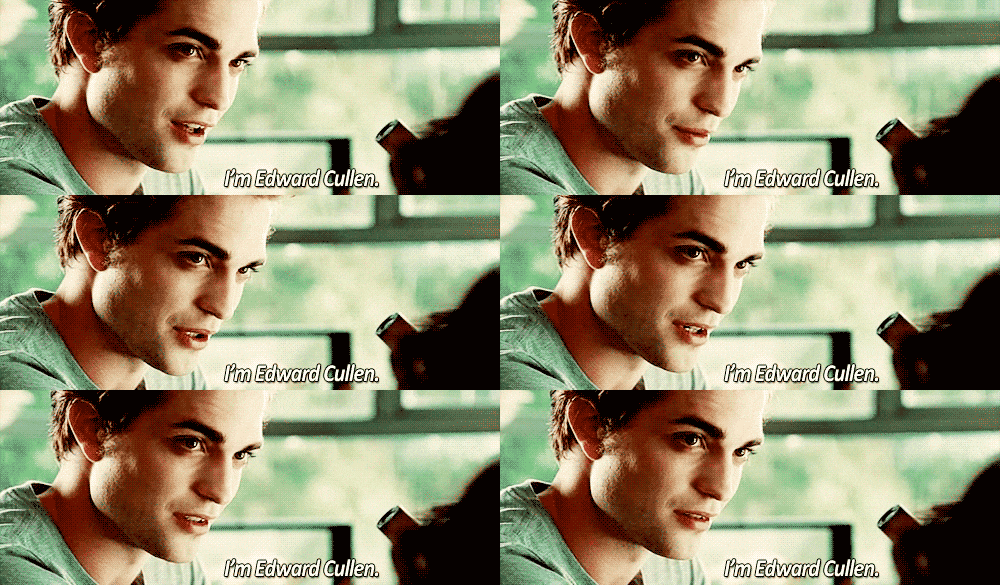
Good for her.

Stories of teen girls’ revenge and rebellion for your inner Lucille Bluth

As summer approaches and the weather warms up, your teen readers might be feeling a little more feisty and in the mood for some rebellion (as they get ready to escape their schools’ authority, some for the summer and some for life).

If they’re more of the “vicarious revenge and rebellion” types, these three recent tales will scratch your readers’ itch for girls fighting back and/or getting revenge in varied and creative ways!

Here Lies a Vengeful Bitch

Who: High school ne’er-do-well Annie Lane

What does she need revenge for: Her own murder

Annie Lane has been beaten, stabbed, and left dead in a river.

That’s how Codie Crowley’s 2024 YA debut, Here Lies a Vengeful Bitch, opens. Part I Spit on Your Grave, part Susie Q (the 1996 made-for-TV movie about a high school girl tragically killed who can interact with the living world to fix unfinished business), Annie returns to her home, her high school, and the scene(s) of the crimes against her, much to the confusion and consternation of those who knew her alive.

Annie knows that someone close to her killed her and, with a ragtag gang of dead (maybe? It’s complicated.) accomplices and a kickass Black Sabbath soundtrack, Annie sets out to literally paint the town red and accomplish two important goals:

  1. Figure out who, exactly, she remembers interacting with in her final hours ultimately did the deed and left her for dead, and
  2. Make sure that person suffers until their last breath

All while making sure the community that had rejected her for as long as she could remember is as traumatized by her murder as she was. And, of course, maybe figure out what’s going on with that cute ghost guy in the mansion on the hill with the sweet vintage motorcycle.


Hello Girls

Who: Lucille and Winona

What do they need revenge for: Lucille, for being trapped in a cycle of family poverty made worse by her brother’s drug-dealing and stealing Lucille’s secret cash stash, and Winona, whose life of wealth and privilege provided by her philanthropist weatherman father hides a horrific cycle of abuse and control

Lucille and Winona are trapped – Lucille by her family’s poverty and Winona by her family’s wealth and public image. 


Lucille’s brother does nothing but keep the couch from floating away while dealing drugs on the side (some recreational, some for more nefarious purposes), while Winona’s dad – living off her presumed-dead mother’s family wealth to prop up his public image as a philanthropist and the area’s most charming television weatherman – controls every moment of Winona’s life, from her caloric intake to even her slightest expression of emotion, with horrific abuse to follow for even the slightest step out of line (trigger warnings necessary for readers with a history of trauma and/or abuse). 

They rebel in whatever small ways they can, by sneaking out to a local dive bar and Lucille hiding small amounts of cash, but can never escape the horrors of their home lives for very long. When both girls are pushed too far by their family circumstances and lack of a foreseeable escape, they take matters into their own hands: stealing Winona’s grandfather’s classic sports car for a cross-country road trip involving a handsome drifter, an Amber Alert, hustling locals in pool halls and casinos, and disguises with varying levels of competence and intricacy.

That’s to say nothing of the bigger crimes the girls have to engage in to keep themselves on the road, hurtling toward where Winona is certain her mother is still alive.
It’s Thelma and Louise meets Boys on the Side as Lucille and Winona reject the families that have held them back for so long to be family for each other.


The Queen’s Spade

Who: Sarah Forbes Bonetta (Ina)

What does she need revenge for: Broadly, colonialism; specifically, being kidnapped from her West African royal family to serve publicly as a representation of Queen Victoria’s goodwill toward Britain’s conquered lands

Sarah Raughley’s 2025 tale of historical revenge opens with Ina, known in Britain (and historically – this is a fictionalization of a real figure from British colonial history) as Sarah Forbes Bonetta, ensuring that one of the people central to her kidnapping and transportation from West Africa to the United Kingdom ends his life as humiliatingly as possible. 

Mr. Bellamy was just one name on Ina’s Arya Stark-esque list of people who had wronged her and forced her to become the smiling public face of Queen Victoria’s charity toward her colonial subjects.

Don’t worry – Victoria has her own spot on the list.

Aided by a dreamy Chinese gangster with myriad connections to the London underworld (to say nothing of his own motivations for revenge against the Crown), Ina has to dodge an arranged marriage, the romantic advances of one of the Queen’s sons, social and political intrigue, and the repeated meddling of a man connected to her traumatic and horrific experiences in a Sierra Leone boarding school, all while attempting to make Britain’s wealthy elites pay for stealing Ina from her homeland. 
It’s Kill Bill mixed with Things Fall Apart, with a healthy dose of history for readers curious about how the colonized felt about being “welcomed” into the British Empire.

-Justin Hofstetter

Graphic Novels Overview, Part One: Format Guide

What is a Graphic Novel

The graphic novel is a distinct literary format that employs sequential art in the form of comic-strip-style illustrations throughout a book-length work to tell a complete narrative. Unlike traditional written books, graphic novels use shorter sentences and rely heavily on images to communicate the story. The sequential art in graphic novels is not just a complement to the written text; it is the driving force behind the story. The artwork is essential to the graphic novel format, much like the importance of visuals in a children’s picture book. The artwork in graphic novels collaborates with the text to create a cohesive storytelling experience. Unlike illustrated children’s picture books that often embellish the written text, the artwork in graphic novels collaborates with the text to create a cohesive storytelling experience. Graphic novels are longer than comic books and provide a cohesive storyline within a single volume.

Graphic novels, like comics and manga, use panels to organize the narratives. These panels are often presented as boxed segments that contain scenes or parts of scenes in the story and are divided by blank space known as the “gutter.” Graphic novels also use speech and thought bubbles, emanata, and captions to tell a story to readers. Unlike most comic books and manga series, graphic novels are usually published as regular bound books. They are more likely to be standalone works, but like other novels, they can be turned into a series.

Definitions by The Graphic Library

Comic books: are serialized stories featuring comic drawings, generally following the adventures of superheroes, villains, etc. These are usually presented in a single-issue, paperback format.

Graphic Novel: A story told with sequential, illustrated panels.

Original Graphic Novel (OGN): a story published in a full-length graphic novel without being published as single-issue floppies first.

Online Resources

Books to Learn More

Awards

-Stephanie Mahar

Stephanie’s Favorites

  • Huda F Are You?
  • by Huda Fahmy
  • Publisher: Dial Books
  • Release Date: November 23, 2021
  • Reading Level: Gr. 7-9
  • ISBN: 9780593324318
  • The Legend of Auntie Po
  • by Shing Yin Khor
  • Publisher: Kokila
  • Release Date: June 15, 2021
  • Reading Level: Gr. 5-9
  • ISBN: 978-0525554899
  • Squad
  • By Maggie Tokuda-Hall & Lisa Sterle
  • Publisher: Greenwillow Books
  • Release Date: October 5, 2021
  • Reading Level: Gr. 9-12
  • ISBN: 978-0062943149
  • Other Ever Afters: New Queer Fairy Tales
  • by Melanie Gillman
  • Publisher: Random House Graphic
  • Release Date: September 20, 2022
  • Reading Level: Gr. 7-9
  • ISBN: 978-0593303184
  • Almost American Girl 
  • By Robin Ha
  • Publisher: Balzer + Bray
  • Release Date: January 28, 2020
  • Reading Level: Gr. 8-12
  • ISBN: 978-0062685094
  • The Magic Fish 
  • By Trung Le Nguyen
  • Publisher: Random House Graphic
  • Release Date: October 13, 2020
  • Reading Level: Gr. 7-12
  • ISBN: 978-1984851598
  • Laura Dean Keeps Breaking Up with Me
  • By Mariko Tamaki & Rosemary Valero-O’Connell
  • Publisher: First Second
  • Release Date: May 7, 2019
  • Reading Level: Gr. 8-12
  • ISBN: 978-1626722590
  • Mooncakes
  • By Suzanne Walker & Wendy Xu
  • Publisher: Oni Press
  • Release Date: October 15, 2019
  • Reading Level: Gr. 8-12
  • ISBN: 978-1549303043
  • Check, Please! Book 1: # Hockey 
  • By Ngozi Ukazu 
  • Publisher: First Second
  • Release Date: September 18, 2018
  • Reading Level: Gr. 8-12
  • ISBN: 978-1250177964
  • The Prince and the Dressmaker
  • By Jen Wang
  • Publisher: First Second
  • Release Date: February 13, 2018
  • Reading Level: Gr. 7-12
  • ISBN: 978-1626723634
  • Quiet Girl in a Noisy World: An Introvert’s Story 
  • By Debbie Tung
  • Publisher: Andrews McMeel Publishing
  • Release Date: November 7, 2017
  • Reading Level: Gr. 7-12
  • ISBN: 978-1449486068
  • Nimona 
  • By N.D. Stevenson
  • Publisher: Quill Tree Books
  • Release Date: May 12, 2015
  • Reading Level: Gr. 7-12
  • ISBN: 978-0062278227

Genre Spotlight: Horror for Teens

photography of cat at full moon
Photo by Pixabay on Pexels.com

Fall is an excellent time to get into some spooky, haunty, ghoulish titles, and there are a variety of new books to tantalize teens. Horror isn’t so much a genre with a specific set of rules, but a mood that comes into a variety of other genres whether it is fantasy, paranormal, mystery, historical, or realistic and can contain elements of slasher, body horror, gothic, dark fantasy, or folk horror just to name a few. There are a variety of short story collections and novels for teens, and some adult crossovers to suggest that will be sure to give teens thrills and chills in whatever their genre inclinations are.

Continue reading Genre Spotlight: Horror for Teens

Genre Guide: Paranormal Romances for Teens

Source

Definition

Paranormal Romance is a sub-genre of Romance. For a novel to be a Paranormal Romance, a simple thing must occur: love must begin between a human and a supernatural being (whether wholly supernatural or partially, just as long as there are supernatural elements present). However, this can be a broad interpretation. Usually, the protagonist (often the human) in these novels is put in some kind of danger, where they come to realize they can overcome this danger either on their own or with the help of the supernatural love interest.

Authors to Know

Characteristics
Main characters include both humans and supernatural beings. The supernatural being can be wholly supernatural or partly, and include but are not limited by the following “types”: vampire, werewolf, fairy, magician, mermaid, zombie, psychic, ghost, demon hunter, demon, angel, shapeshifter, dragon, and gods or goddesses.  Additionally, the human in Paranormal Romances can have a touch of the paranormal as well.  An example is the teen psychic that can see the ghost. Quite often, when it comes to paranormal romances written for teens, a love triangle is involved.  There could be more than one human, or more than one supernatural being in the triangle. Continue reading Genre Guide: Paranormal Romances for Teens

Beyond The History Books: Genre Guide to ‘Off The Beaten Path’ Historical Fiction

IMG_0813

Definition

Historical fiction can be a deceptively complex genre to define.  It would seem initially that any fiction set in the past might be considered historical fiction but as we examine this basic distinction, it becomes significantly less simple.  After all, how far into the past does a novel need to be set to be considered historical rather than contemporary realistic fiction?  Do we use a specific range of years? Do we consider the likely cultural memory and lived experiences of the intended audience?  For the purposes of this guide, I’ve decided to define historical fiction as a novel set in the past in which the particular realities of that time and place play a significant role in the narrative.

Characteristics

The genre of historical fiction is vast and varied.  The idea of compiling a definitive genre guide is fairly daunting  so I chose a focus: “off the beaten path” historical fiction–novels set in the past that feature perspectives, places, time periods, or events frequently unexplored in both the average history class curriculum and historical fiction.

Appeal

These novels expand the genre beyond the ‘white people in interesting clothing’  approach that can dominate the historical fiction shelves. In the process of creating history, many voices have been silenced, forgotten, or shoved aside. Good historical fiction–like all good fiction–weaves an absorbing story with complex characters, providing us with an opportunity to counteract simplified or biased versions of history.  Through fiction, readers can look at well-known events from a new perspective, immerse themselves in unfamiliar cultures, or see an exploration of their heritage.

Continue reading Beyond The History Books: Genre Guide to ‘Off The Beaten Path’ Historical Fiction