Quick Picks for Reluctant Readers (#QP2027) Feature Review: White House Secrets: Medical Lies and Cover-Ups by Gail Jarrow


Who doesn’t want to learn about presidential secrets and coverups? Gail Jarrow has written a highly engaging, fascinating look at nine presidents in history who concealed medical issues while president of the United States of America. Presidents profiled include James Garfield, Chester Arthur, Grover Cleveland, Woodrow Wilson, Warren Harding, Franklin Roosevelt, John Kennedy, Ronald Reagan, and Joe Biden. Readers will learn who knew what when, including the media, family members, and medical professionals. 

Jarrow writes about presidential medical secrets with a sense of urgency. Students will be shocked by some of the details, such as that James Garfield wouldn’t have died if his doctors hadn’t put unclean fingers inside his wound and just how much medication President JFK was taking for Addison’s disease and severe back pain. Given that many of our politicians are hanging on to their offices well into old age, these discussions around fitness for office and ethics are highly relevant. Recommended for teens who like historical nonfiction that reveals complex, messy history and exposes the truth about historical figures. 

Hand this to students who like books such as the History Smashers series by Kate Messner or to teens who have read other books by Gail Jarrow such as Blood and Germs or The Poison Eaters.

–Laura Gardner

“Who Owns the Moon?”

An interview with nonfiction authors Cynthia Levinson and Jennifer Swanson


We sit down with nonfiction authors Cynthia Levinson and Jennifer Swanson to discuss the changing role of nonfiction for young readers, writing about rapidly changing fields, and what makes nonfiction palatable for the kids in your library!

Purchase Who Owns the Moon? for your library here.

Find the third edition of Fault Lines in the Constitution here.

ind Jennifer Swanson’s Atlas Obscura Explorer’s Guide to Inventing the World here.


See Also: The Hub’s Quick Picks for Reluctant Readers review of Who Owns the Moon?

Learn more about Authors Against Book Bans.

Find a screening of The Librarians.

Quick Picks for Reluctant Readers (#QP2026) Feature Review: Who Owns the Moon? by Cynthia Levinson & Jennifer Swanson


Rather than simply rehash the history of moon exploration, Levinson and Swanson frame this history through current ethical questions about who “owns” space and provide fresh insights on the history, not just of space exploration but also on international conflict and collaboration around exploration of the moon. The end result is a fast-paced, fun, and thoughtful overview of space exploration that feels like a timely “update” for current and future scientists.

Visually the book combines comics-style illustrations with photos and charts in an appealing and easy to follow way. The text is broken up with catchy headline-style subcategories to keep the pace flowing for readers. The chapters also have buzz-y titles like “Bumper Cars in Space: Debris,” which are informative but also signal a sense of fun that will keep readers engaged. The text itself is a great combination of presenting questions to the reader with clear and easily summarized scientific and historical facts, which adds to engaging pacing of the book. 

This is a great pick for nonfiction readers – particularly teens who are interested in science and space exploration but also teens who are interested in social justice issues and ethical questions about the future of science. Nonfiction readalikes include The Big Backyard: The Solar System Beyond Pluto by Ron Miller and Jeremie Francfort’s Big Bangs and Black Holes: A Graphic Novel Guide to the Universe. Fans of science fiction titles Andy Weir’s The Martian would also enjoy this book.

–Maryanne O..

Coming Soon, The Hub’s Interview with the Author of Who Owns the Moon!

Amazing Audiobooks (#AA2026) Featured Review: The Story of My Anger by Jasmine Mendez

This biography of Malcolm X for middle and high schoolers is an engaging look at the life of the civil rights leader. Listeners will learn about the life of Malcolm X, who walked many different paths on his way to becoming a Civil Rights leader.

Ibram Kendi’s reading is clear and accessible. This is a strong, serviceable reading of the title that will engage readers. He brings gravitas to the seriousness of some Malcolm X’s story, and humor to those parts that deserve it. Malcolm X’s long struggle with Elijah Muhammad and his subsequent separation from the Nation of Islam are presented with care. His death and the aftermath for his followers and family are read with sympathy and will connect with listeners.

Any young people who are interested in the history of the Civil Rights movement or the life of Malcolm X will be engaged by this book as well. If your readers enjoyed Revolution in Our Time by Kekla Magoon they will relish expanding their knowledge of the Civil Rights movement with this title. If they are fans of Ibram X. Kendi’s other books, like How to Be a (Young) Antiracist, will also be drawn in by this biography.


-Lynda Salem Poling

Quick Picks for Reluctant Readers (#QP2026) Feature Review: Death in the Jungle: Murder, Betrayal, and the Lost Dream of Jonestown by Candace Fleming


What really happened at the Peoples Temple Agricultural Project, or Jonestown, in 1978? Was it a mass suicide, a massacre or mass murder, or some combination? Death in the Jungle traces the threads leading to this event, from defining what a cult is to the childhood of the Peoples Temple founder, Jim Jones, the racial inequality of the era that helped lead to the development of the Peoples Temple, its initial veneer of being a Christian movement, and its eventual relocation to Guyana and the creation of Jonestown. First-hand accounts from a few of the hundreds who were caught up in his movement center the story on the people drawn in by Jones, who studied various influences like Adolf Hitler to learn how to manipulate and indoctrinate followers. This chilling chronicle culminates in an explosive account of the murder of Congressman Leo Ryan, sent by concerned former members and families of members to investigate, and then the deaths of over 900 people in Jonestown, a third of whom were minors, in what Jones called “revolutionary suicide,” but most of which are now regarded as murder.

Fleming’s account of what led to the tragedy of Jonestown is gripping, factual without tipping over into gratuitous for either the violence or the sexual exploitation, and keeps the focus on the real-world impact on the victims. The text is simple but compelling, building dread as it nears its conclusion, even if the ending is already known. The photographs included show many of the key players and spaces but don’t include any of the bodies. Though the list of people involved might have worked better as an appendix rather than at the beginning, the narrative account of Jones’s life and views and the insidious way he developed the Peoples Temple immediately draws the reader in. 

This book is a must-read for teens with an interest in true crime or curiosity about cults, especially those curious about Jim Jones and The Peoples Temple and/or the origin of the phrase “drinking the Kool-aid”. Give to fans of Fleming’s other nonfiction titles, especially Murder Among Friends, and to teens who’ve heard about Leah Remini or other cult “escapee” stories or who enjoyed novels like The Project by Courtney Summers or The Grace Year by Kim Liggett..

–Leanna C

Check out our recent interview with Candace Fleming on Death in the Jungle below!

Read the blog that goes along with this interview and learn more about Candace here.

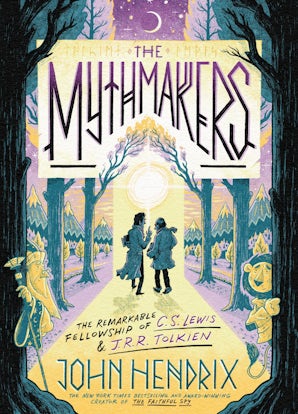
Great Graphic Novels (#GGN2026) Featured Review: The Mythmakers: The Remarkable Fellowship by John Hendrix

In 1926, J.R.R. Tolkien and C.S. Lewis were on the English faculty in Oxford. Both deeply impacted by the Great War, they found comfort in literature, particularly the northern mythology they had discovered in their youth. This shared love led to a deep friendship which would have a profound impact on the development of fantasy and other contemporary speculative fiction. The story of this literary friendship is narrated by a lion and a wizard, who explore how the two authors influenced each other’s writing and beliefs—including Lewis’s conversion to Christianity, the development of their greatest works, as well as the conflict which would eventually bring an end to their relationship.

Hendrix’s creative biography alternates comic panels with longer blocks of illustrated prose. In addition to the story of Tolkien’s and Lewis’s friendship, Hendrix includes four optional “portals,” where the two narrators dive deeper into the world of fantasy literature, exploring topics like the role of myth and fairy tales in modern fantasy. The detailed illustrations, lightly colored in gold, lavender, and dark blue, bring whimsy and nuance to the story, and often draw upon the metaphorical content of these two writers’ works. Backmatter includes an author’s note and extensive bibliography for further exploration.

Fans of Lewis and Tolkien will appreciate learning more about these two influential writers, and may be inspired to revisit their works after reading about their evolution. Readers who admired Hendrix’s The Faithful Spy, or An Outbreak of Witchcraft by Deborah Noyes will likely enjoy the level of detail and depth offered here.

–Heather Christensen


Great Graphic Novels (#GGN2026) Featured Review: Halfway There: A Graphic Memoir of Self-Discovery by Christine Mari

Christine is a young adult who is half American/half Japanese and has never really felt close to either side. After growing up in America, she decides to spend a year in Tokyo determined to find herself but instead feels even more out of place. This book follows Christine as she navigates living in a new place and learns who she is and what it is she wants out of life.

Mari blends humor and relatable personal struggles in a visually engaging format. The memoir explores themes of belonging, identity, and personal growth while offering a raw look at adolescence and mental health. The dynamic art style mimics the tone of the story as it progresses through Christine’s journey. Teens will be able to relate to Chrisine’s experiences of self-doubt, family dynamics, and the search for purpose.


Readers who enjoy self discovery and learning about the other half of oneself like in Brownstone by Samuel Teer and Lunar New Year Love Story by Gene Luen Yang would find this read equally appealing. For those looking for something that can help describe anxiety and depression like Everything is OK by Debbie Tung will want to grab this book.


—Jessica Duong

Amazing Audiobooks (#AA2025) Featured Review: The Enigma Girls by Candace Fleming

During World War II, Bletchley Park, known by its codename Station X, was a top-secret center in Britain dedicated to cracking Nazi codes. Young women, often teenagers, arrived with little understanding of their role, yet they quickly became vital to the operation. Tasked with running complex machines, deciphering wireless transmissions, and sorting intelligence, they worked alongside renowned cryptographers to produce information critical to the war effort. These young women’s aptitude for secrecy and specialized skills proved instrumental in supporting the Allies’ success.

The Enigma Girls by Candace Fleming is a compelling work of nonfiction that illuminates the real-life contributions of young women codebreakers at Bletchley Park during World War II. Narrator Moira Quirk lends gravitas to the story, capturing the suspense and importance of their secret work while keeping listeners fully engaged. Though it reads like fiction, the story is all the more powerful and captivating because it recounts true events.


For teens captivated by The Enigma Girls, comparable titles include Candace Fleming’s The Rise and Fall of Charles Lindbergh, another meticulously researched biography highlighting influential figures in history. Other engaging nonfiction options include Impossible Escape by Steve Sheinkin, We Had to Be Brave by Deborah Hopkinson, and Attacked!: Pearl Harbor and the Day War Came to America by Marc Favreau, each detailing gripping moments of courage during wartime. For fans of historical fiction, teens should try Jennifer A. Nielsen’s novels, Resistance and Rescue, which bring to life stories of resilience and bravery during World War II.

-Lorrie Roussin

Other Nominations


The Selected Lists teams read throughout the year in search of the best titles published in their respective categories. Once a book is suggested (either internally or through the title suggestion form), it must pass through a review process to be designated an official nomination.

Each week, the teams feature a review of one of the officially nominated titles. Additional titles to receive this designation are listed as well. At year’s end, the team will curate a final list from all nominated titles and select a Top Ten.

Quick Picks for Reluctant Readers (#QP2025) Feature Review: Homebody by Theo Parish

  • Homebody
  • by Theo Parish
  • HarperAlley / HarperCollins
  • Publication Date: April 23, 2024
  • ISBN:  9780063319585

This graphic novel memoir shares the journey of Theo as they find out more about themself. The author beautifully captures their experience – and relates it to the idea of creating home and sanctuary – before they arrive at the term nonbinary, which feels like home to them. 

This title has instant appeal to teens – and not only those who might be traveling a similar journey to the one Theo is on. Any teen who is grappling with fitting in, identity , or gender would be able to relate to this book. The format makes this memoir very accessible to reluctant readers.  

Teens who have enjoyed reading Gender Queer by Maia Kobabe and The Princess and the Grilled Cheese Sandwich by Deya Muniz will enjoy this graphic memoir. 

–Katie Guzan